 Türkçe
 English
Connect your agency to our specialized Türkiye privacy network. Our compliance experts will verify your business goals to provide the specific legal tools required for local KVKK enforcement and explicit consent management.
Home / KVKK
Get Started
Simplify Cookie Consent Compliance Under KVKK
KVKK is Türkiye’s personal data protection law. Okito helps websites manage cookie notices, consent preferences, script blocking, and consent records from one platform—supporting a clearer and more consistent approach to cookie compliance.
Powering we provide the latest solutions for website privacy compliance




























Manage Cookie Consent with Okito in Three Steps
Scan Your Website
Scan your website to identify cookies, trackers, pixels, and third-party scripts. Review each technology by category, purpose, provider, and duration to create a clear and manageable cookie inventory.
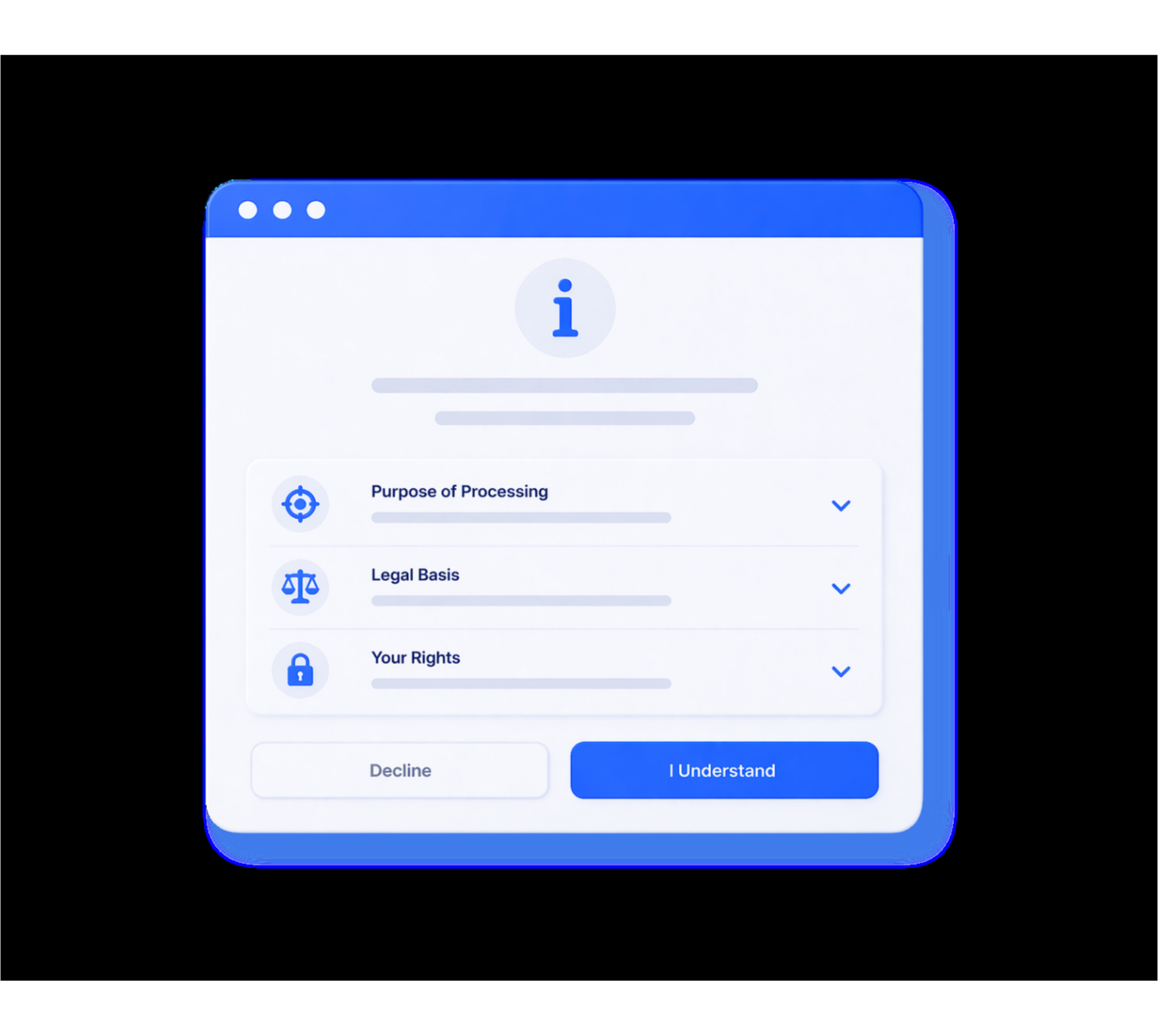
Configure Your Consent Experience
Customize your cookie banner, information notices, categories, and preference center to reflect your website’s data practices. Give visitors clear information and appropriate options to accept, reject, or manage relevant cookie categories.
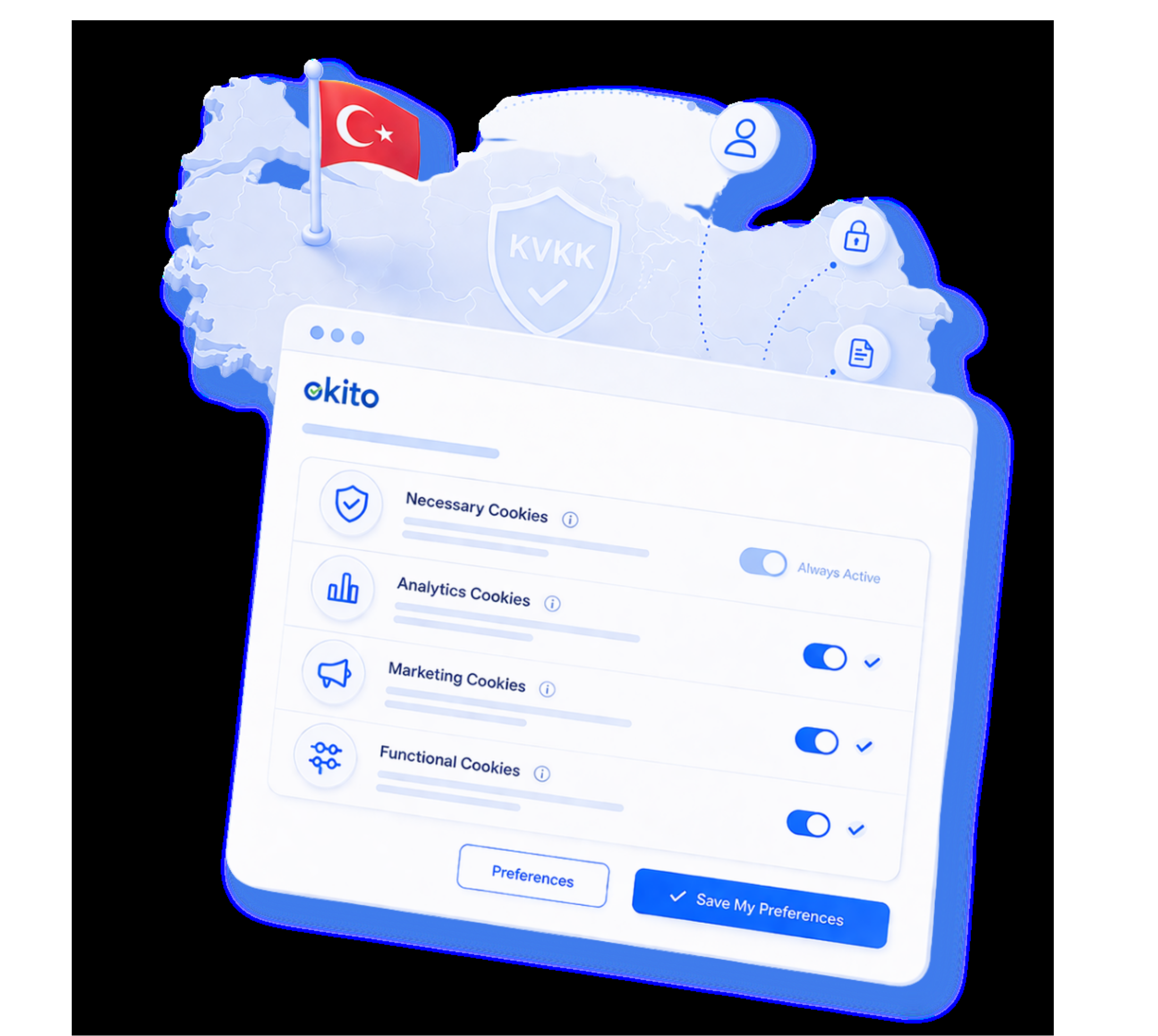
Deploy and Monitor
Add the Okito installation code and publish your consent banner across your website. Apply visitor choices to relevant scripts, store consent records, and monitor newly detected tracking technologies from a central dashboard.
Four Essentials of Cookie Compliance Under KVKK
01
Scan and categorize the cookies and trackers used on your website.
02
Clearly explain what each cookie does and how it uses personal data.
03
Get explicit consent before using non-essential cookies where consent is required.
04
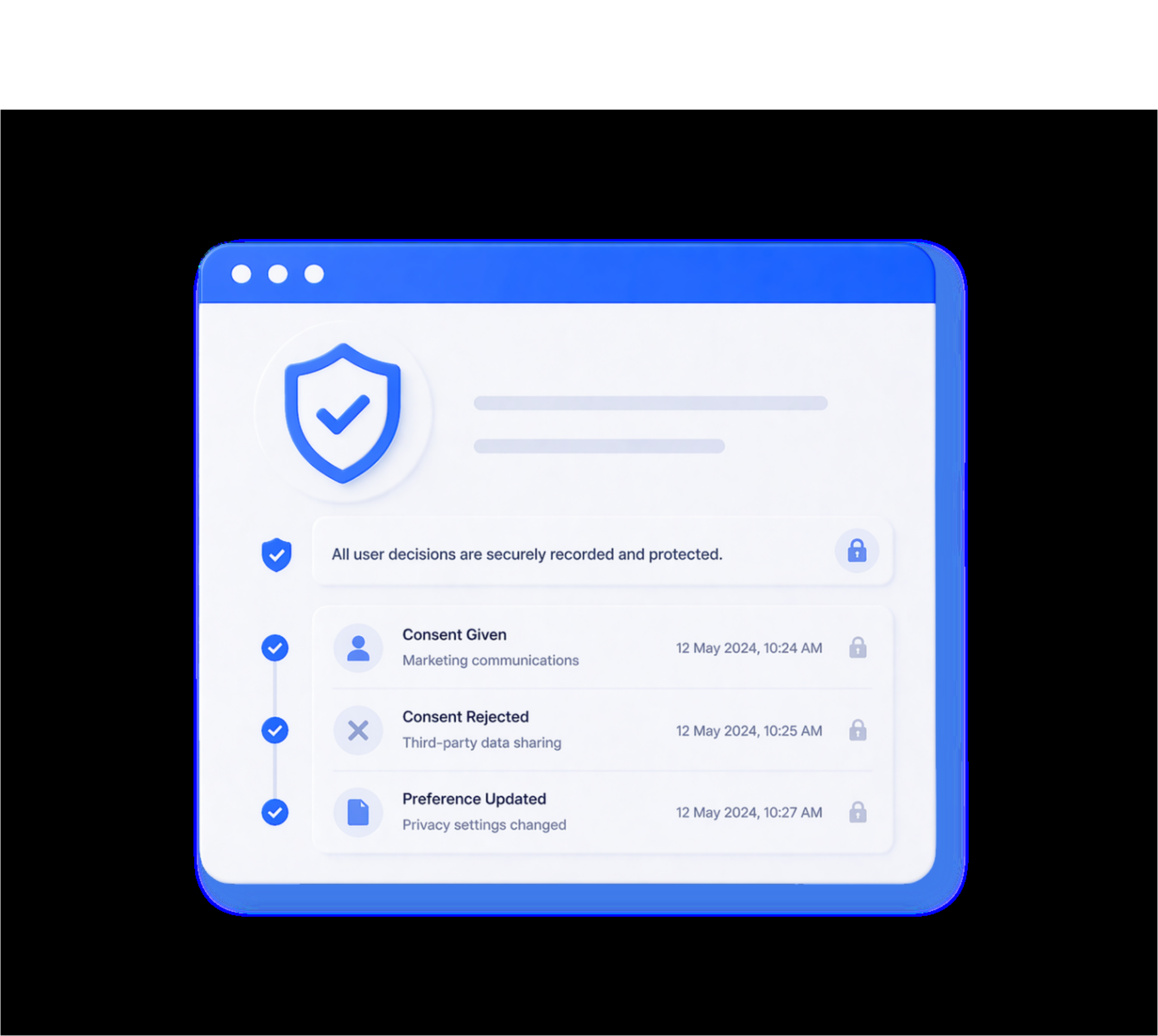
Log consent choices with timestamps and let users change them at any time.
Key Requirements for Türkiye KVKK Compliance
Automated Cookie Scanning and Inventory
Unidentified or outdated tracking technologies can make cookie disclosures incomplete. Okito scans your website and organizes detected cookies, trackers, and scripts into a manageable inventory.
Detect first- and third-party tracking technologies.
Classify cookies by purpose, provider, category, and duration.
Identify newly added or changed technologies.
Keep cookie information easier to review and update.
Clear Notices and Granular Consent
Visitors need clear information and meaningful control over optional tracking. Okito helps you create transparent notices and category-based consent options suited to your website.
Present concise and layered cookie information.
Keep information notices separate from consent requests.
Offer relevant accept, reject, and category controls.
Make privacy preferences easy to access and change.
Consent-Based Script Control
Displaying a banner alone does not control when tracking technologies operate. Okito applies visitor choices by managing relevant scripts according to the configured consent categories.
Block relevant non-essential scripts before consent.
Activate technologies according to visitor preferences.
Apply consent choices consistently across your website.
Send consent signals through supported integrations.
Consent Records and Ongoing Control
Cookie environments change as websites add new tools and integrations. Okito helps you monitor these changes while maintaining an organized history of visitor consent choices.
Record accepted, rejected, and customized preferences.
Track consent and preference changes over time.
Monitor newly detected cookies and trackers.
Support internal reviews with reports and consent history.
Start Managing Cookie Consent Under KVKK
FAQ
Frequently Asked Questions
KVKK is Türkiye’s Law on the Protection of Personal Data No. 6698. It sets the rules for collecting, using, storing, transferring, and protecting personal data while safeguarding individuals’ privacy rights.
Under Article 10 of the KVKK, data controllers must inform users about processing purposes and legal bases. Okito automates this by:
• Layered Notices: Providing a summary notice at the first point of contact and a detailed policy for further reading.
• Dynamic Updates: Automatically updating your cookie list whenever a new tracking script is detected.
• Identity Transparency: Clearly disclosing the identity of the data controller as required by the law.
Yes. For 2026, administrative fines range from TRY 85,437 to TRY 17,092,242, depending on the type and severity of the violation. Certain unlawful activities may also lead to criminal proceedings or compensation claims.
No. Strictly necessary cookies may be used without consent when another lawful processing condition applies. Analytics, advertising, targeting, and similar cookies may require consent if there is no other valid legal basis for processing the data.
KVKK applies to individuals, businesses, public bodies, associations, and other organizations that process personal data automatically or through a structured filing system. This includes employers, online stores, healthcare providers, schools, agencies, and website operators, subject to the exemptions specified in the law.
KVKK violations can occur at any stage of personal data processing, from collection and use to sharing, storage, and deletion. Common examples include:
Collecting Data Without Consent or Another Lawful Basis: Processing personal data without meeting a valid legal condition.
Unauthorized Data Sharing: Disclosing personal data to people or organizations that are not authorized to receive it.
Insufficient Privacy Notice: Failing to explain why data is collected, how it is used, or who may receive it.
Invalid Cookie Consent: Activating cookies that require consent before the user makes a valid choice.
Inadequate Data Security: Failing to protect personal data against unauthorized access, loss, disclosure, or theft.
Excessive Data Retention: Keeping personal data after its legal or operational purpose has ended.
Ignoring Individual Rights: Failing to respond properly to access, correction, deletion, or information requests.
Late Breach Notification: Failing to report a qualifying personal data breach within the required period.
The organization may be investigated and ordered to correct, delete, or stop unlawful data processing. It may also receive an administrative fine. Serious violations can result in suspended processing, criminal proceedings, or compensation claims from affected individuals.
A data controller must notify the Personal Data Protection Board without delay and no later than 72 hours after becoming aware of the breach. Affected individuals must also be informed as soon as reasonably possible. If the deadline cannot be met for a justified reason, the delay must be explained to the Board.
Any information relating to an identified or identifiable person may be unlawful to share without a valid legal basis or proper authorization. This includes identity, contact, financial, health, biometric, location, criminal-record, and private communication data. Unlawful disclosure may result in two to four years of imprisonment under Article 136 of the Turkish Criminal Code.