 Türkçe
 English
Free Cookie Policy Generator for Your Website
Our Cookie Policy Generator helps website owners create clear and compliant cookie policies in minutes. It explains how cookies and tracking technologies are used on your website while helping you stay aligned with privacy regulations such as GDPR and similar global standards.




























Cookie Policy Generator
Enter your domain, then provide a few details to generate your cookie policy.
Example: example.com
Policy generated
Professionally prepared in English.
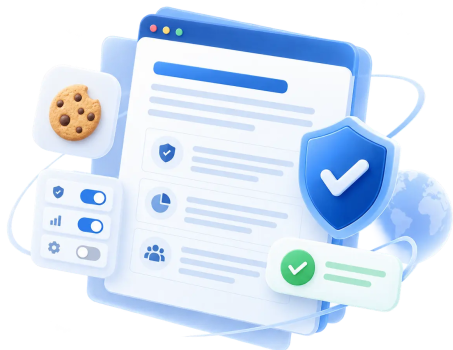
Policy preview
A cookie policy built around your website
Websites use different tools, integrations and third-party services. A useful cookie policy should reflect the technologies operating on your website rather than relying on generic clauses that may not apply.
Okito’s Cookie Policy Generator uses the information you provide to prepare a structured policy covering:
Your website and business details
The purposes for which cookies may be used
Cookie providers and third-party services
Storage periods and cookie duration
User choices and preference methods
Before publishing, compare the generated policy with the cookies and tracking technologies currently used on your website.
Clear cookie information for your visitors
A cookie policy should do more than state that a website uses cookies. Visitors should be able to understand why those technologies are used, whether they are necessary and what choices are available to them.
The generated policy can organize information about:
Essential and optional cookies
Website functionality and user preferences
Analytics and performance measurement
Advertising and third-party content
Cookie settings and consent withdrawal
Clear explanations help visitors understand how tracking technologies work without requiring technical or legal knowledge.
Cookie transparency across different regions
Cookie requirements vary depending on the location of the business, its visitors and the technologies used.
Websites serving users in the European Union or United Kingdom may need to provide clear cookie information and obtain consent before using certain non-essential technologies. In the United States, state privacy laws may require disclosures and opt-out options for activities such as targeted advertising or the sale or sharing of personal information.
Relevant frameworks may include:
GDPR and the ePrivacy framework
UK GDPR and PECR
CCPA and CPRA
Other US state privacy laws
KVKK, LGPD and other applicable frameworks
Not every requirement applies to every website, so the final policy should reflect your audience, technologies and actual data practices.
Create Your Cookie Policy in Four Steps
Add the domain of the website for which you want to create a cookie policy.
Choose the policy language and the industry that best describes your business.
Enter your company name and email address to complete the required information.
Create your cookie policy, then copy the text or download it as a Word document.

Should a Cookie Policy Cover Similar Tracking Technologies?
Yes. Where they are used, a cookie policy should also explain pixels, tags, local storage, scripts, device identifiers and other technologies that store or access information on a user’s device.
These technologies may support analytics, personalization, advertising or content delivery in ways similar to cookies. Using the phrase “cookies and similar technologies” can describe the wider scope, but the technologies actually in use should still be identified clearly.
Frequently Asked Questions
A cookie policy explains how a website uses cookies and similar technologies. It typically describes what these technologies do, why they are used, who provides them and how long they remain active.
It may also explain how visitors can manage or withdraw their choices.
A Cookie Policy Generator is an online tool that creates a structured cookie policy from information provided by a business.
Instead of drafting the document from scratch, users provide relevant details and receive organized policy content that can then be reviewed and adapted to their website.
Start by identifying the cookies and similar technologies used on your website. For each one, determine its purpose, provider and duration, and consider whether it is necessary or requires user choice under the applicable rules.
You can write the policy manually or use Okito’s Cookie Policy Generator to organize the information into a structured document that can be reviewed, copied or downloaded.
Yes. Okito’s Cookie Policy Generator is free to use. Enter your website and business information, generate the document and then copy the text or download it as a Word file.
A static template provides standard language that users generally need to select, edit and adapt themselves.
A cookie policy generator uses a guided process to collect relevant information and organize it into a policy. This can reduce manual drafting and make it easier to create content that reflects the information provided.
Neither approach automatically verifies every cookie or guarantees legal compliance.
Yes. You can write your own cookie policy if you accurately identify the technologies used on your website and explain their purposes, providers, duration and relevant user choices.
Avoid copying another website’s policy because its cookies, third-party services and data practices may be different. A policy should describe your own website rather than another organization’s setup.
Start by reviewing the cookies and similar technologies introduced by your WordPress theme, plugins, forms, analytics tools and embedded content.
You can then create and publish the policy by following these steps:
Create a new WordPress page.
Add and review the cookie policy.
Publish the page and link to it from the footer.
Connect the policy to your cookie banner or preference panel where appropriate.
Review the policy again whenever your plugins, integrations or connected services change.
Review the cookies and similar technologies used by your Shopify store, installed apps, analytics services, payment tools and advertising integrations.
Then:
Create a new policy or content page in Shopify.
Add and review the cookie policy.
Link the page from your store navigation or footer.
Make the policy accessible through your cookie banner or preference panel where appropriate.
Update the policy when you install new apps or change your tracking and advertising setup.
There is no single US federal law that requires every website to publish a separate cookie policy.
Requirements can vary depending on the business, the information collected, the users involved and the state or sector-specific laws that apply. For example, the CCPA may require covered businesses to provide disclosures about certain online data practices and relevant opt-out methods.
A cookie policy can help organize these disclosures, but its content should be based on the requirements that apply to the specific business.
Publish the cookie policy on a dedicated page and link to it from the website footer. It should also be accessible through the cookie banner or preference panel so visitors can review the information while making or changing their choices.
The policy should remain available after the banner is closed.