 Türkçe
 English
Tell us about your organisation, websites and consent management needs. Our team will recommend an appropriate Okito setup.
Home / General Data Protection Regulation (GDPR) Compliance
Get Started
General Data Protection Regulation (GDPR) Compliance
GDPR compliance requires organisations to process personal data lawfully, fairly and transparently while protecting individual rights. Okito supports website privacy compliance by identifying cookies and trackers, managing consent preferences, controlling consent-based technologies and maintaining consent records.
Powering we provide the latest solutions for website privacy compliance



























Clear Data Transparency
Explain which cookies and tracking technologies are used, why they are used and which third parties may receive data. Okito helps present this information through clear, layered and multilingual consent experiences.
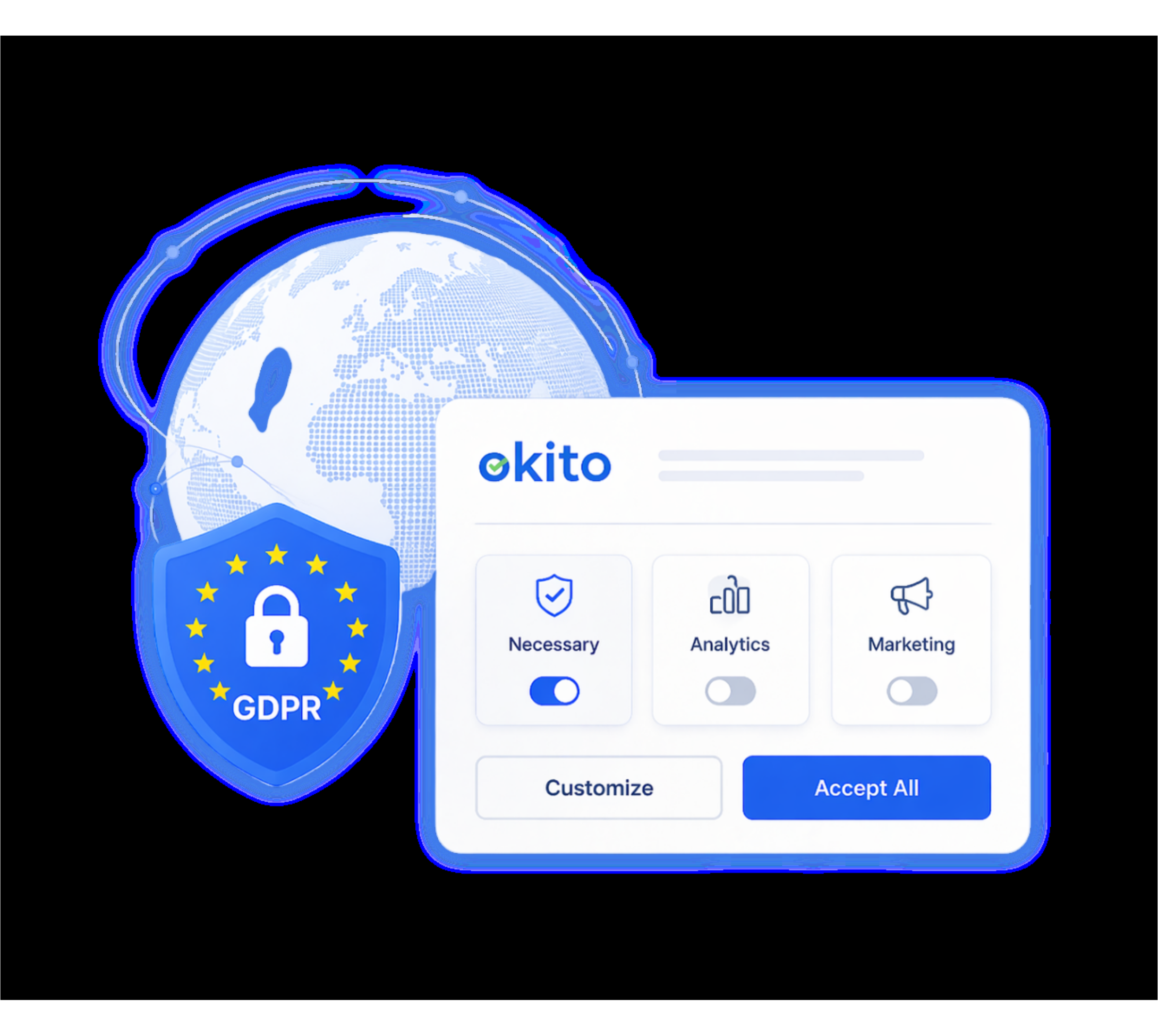
Valid Consent and Preference Control
Collect granular consent where required and give visitors clear control over their privacy preferences, including the ability to review, update or withdraw consent.
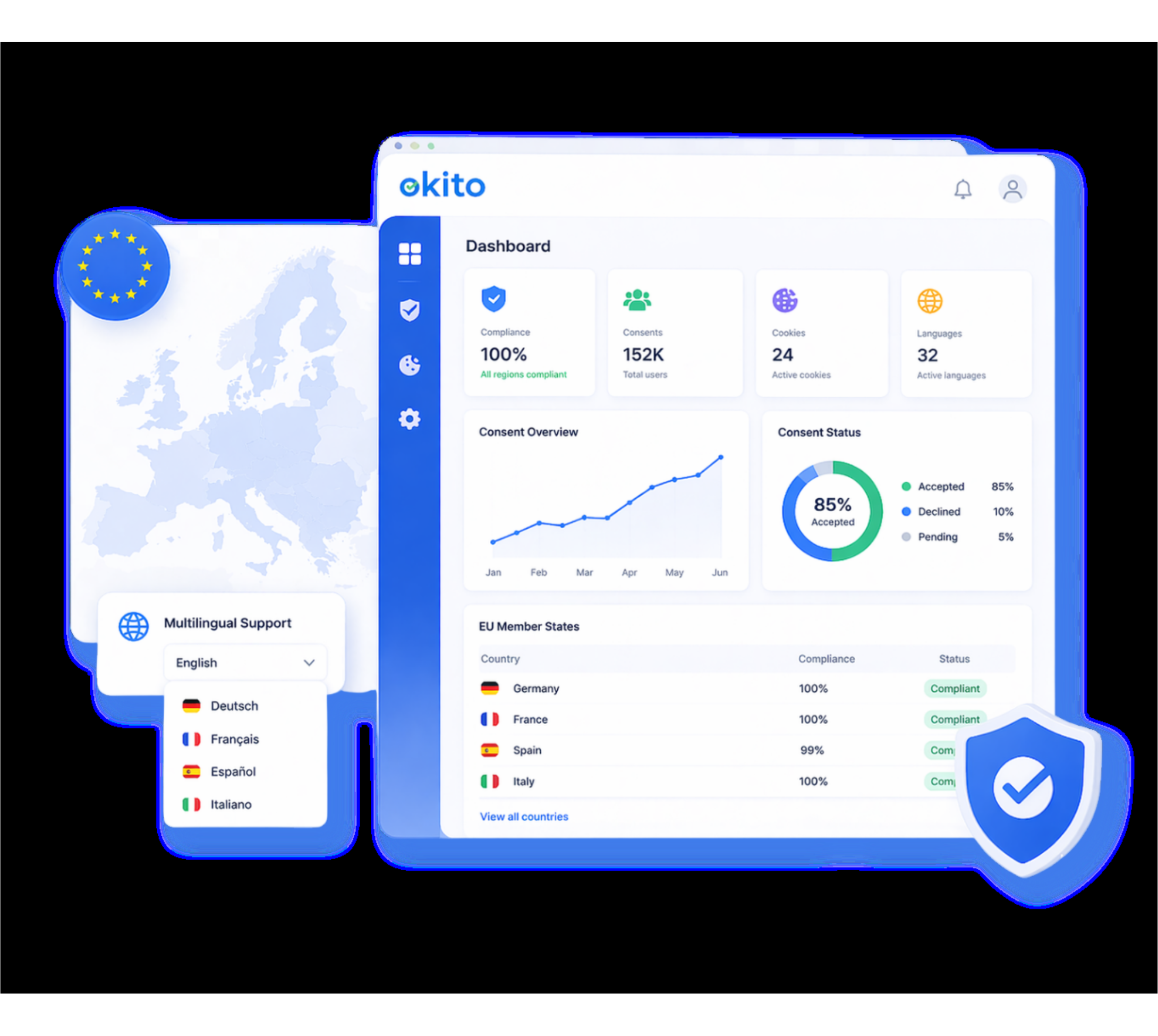
Ongoing Accountability
Manage cookie scans, consent settings and consent records as your website, vendors and tracking technologies change over time.
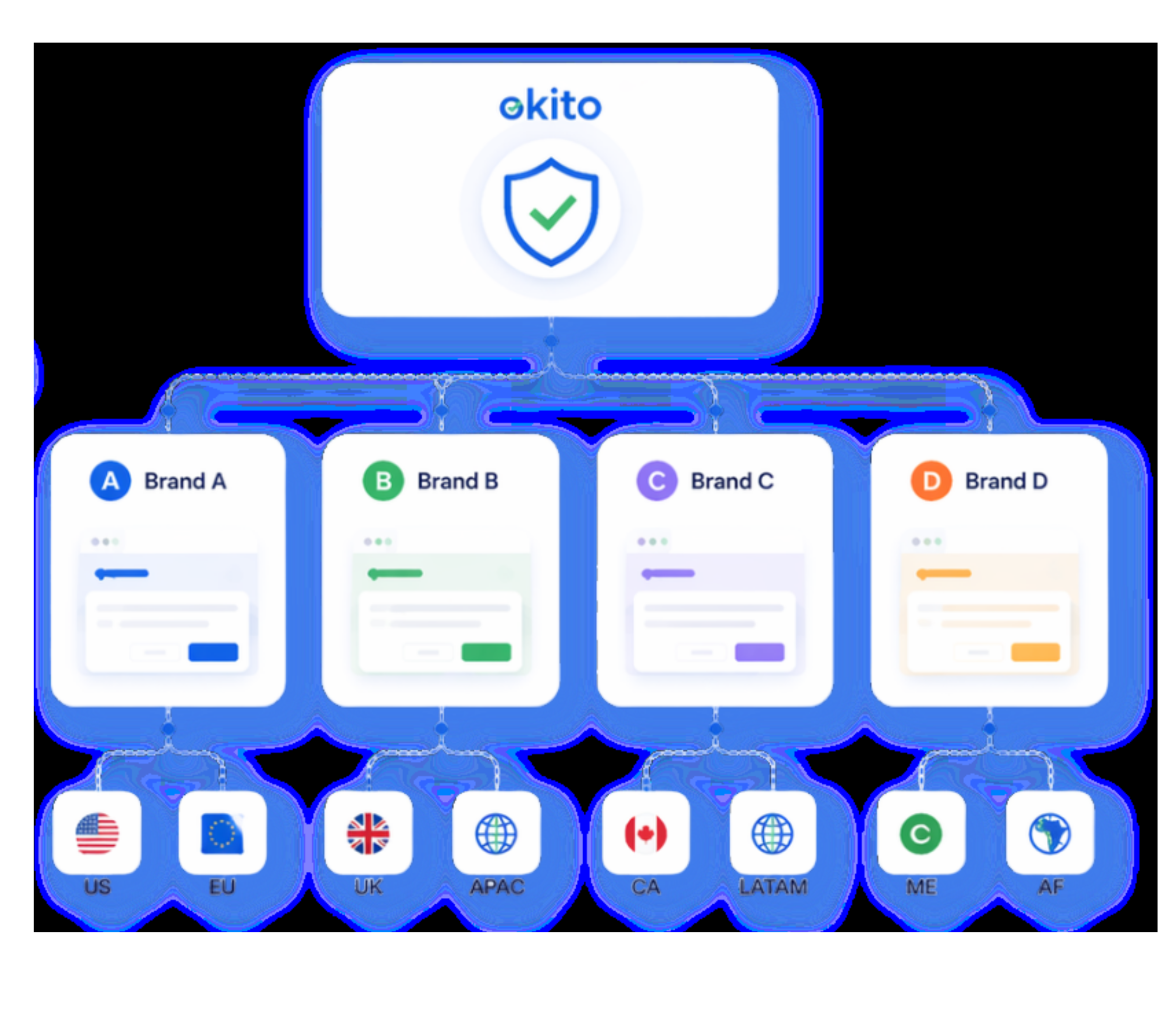
Four Steps to Stronger Website GDPR Compliance
01
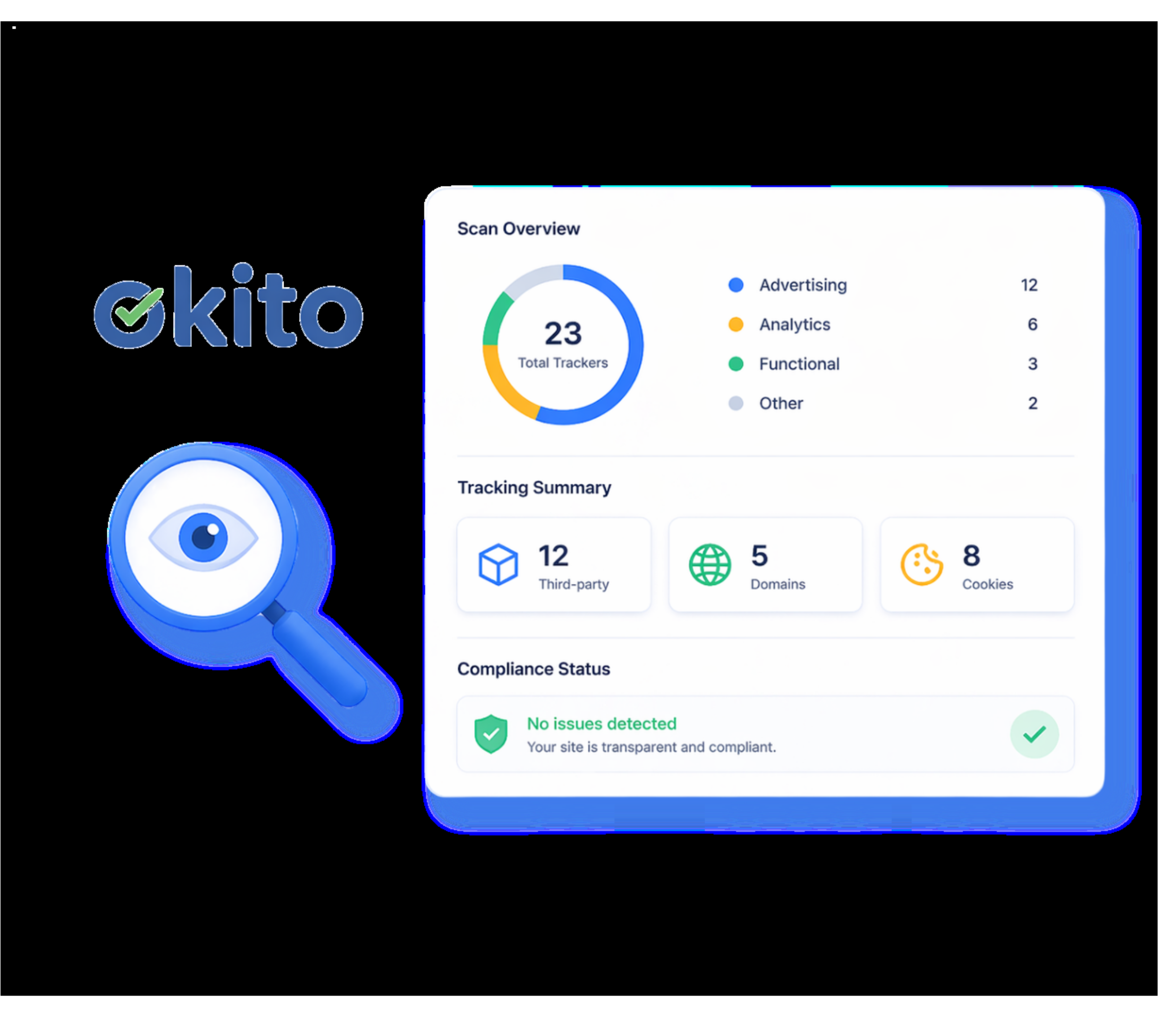
Scan your website to identify and classify cookies, trackers and third-party scripts.
02
Explain their purposes and request consent where required.
03
Apply visitor preferences to consent-dependent cookies, tags and scripts.
04
Record consent activity and review your configuration as technologies change.
Website compliance does not end when a consent banner is published. Okito turns consent management into a repeatable process covering discovery, transparency, enforcement and accountability.
Core Website Controls for GDPR Compliance
Clear Information and Purpose Transparency
The GDPR requires organisations to provide clear and accessible information about how personal data is collected and used. Okito helps connect your consent interface with transparent cookie and privacy information.
Explain the purposes of cookies, trackers and similar technologies
Identify relevant categories, providers and retention periods
Present information through clear and layered notices
Connect consent choices with cookie and privacy policies
Review disclosures when website technologies or data practices change
Valid Consent and Granular Choice
Where an organisation relies on consent, it must be freely given, specific, informed and unambiguous. Visitors should understand what they are agreeing to and retain meaningful control over optional processing.
Provide clear Accept, Reject and Manage Preferences options
Avoid silence, inactivity or pre-selected categories as indications of consent
Request separate choices for distinguishable processing purposes
Keep consent-dependent technologies inactive until the required choice is received
Allow visitors to change or withdraw their preferences as easily as they provided them
Consent Enforcement Across Tags and Scripts
A cookie banner is effective only when visitor choices are reflected in the website’s technical behaviour. Okito helps apply consent preferences across cookies, tags and third-party scripts.
Control analytics, advertising and personalisation technologies by category
Apply prior blocking where consent is required
Update tag and script behaviour when preferences change
Deploy through Google Tag Manager, direct script installation or custom integrations
Communicate consent signals through Google Consent Mode v2 and IAB TCF v2.4 where applicable
Consent Records and Ongoing Accountability
Organisations relying on consent should be able to demonstrate how and when it was obtained. Okito maintains structured consent records and provides visibility into changes across your consent environment.
Record accepted, rejected and customised consent choices
Store date, time, consent scope and relevant banner version
Track preference changes and consent withdrawals
Run scheduled cookie scans to identify new cookies and trackers
Generate reports for internal review and audit preparation
Set Up GDPR Consent Management with Okito
Faq
Frequently Asked Questions
GDPR compliance is the ongoing process of meeting the requirements of the General Data Protection Regulation when processing personal data. It involves lawful, fair and transparent processing, appropriate security measures, respect for individuals’ rights, and the ability to demonstrate accountability under the official GDPR text.
The GDPR applies to controllers and processors established in the EU or EEA when they process personal data in the context of their activities. It can also apply to organisations outside the EU or EEA when they offer goods or services to individuals in the EU or monitor their behaviour there.
A practical GDPR compliance checklist should cover the following key areas:
Data Mapping: Identify the personal data you process, its purposes, sources and recipients.
Lawful Basis: Define and document the appropriate lawful basis for each processing activity.
Retention and Transparency: Set appropriate retention periods and keep privacy information clear and up to date.
Individual Rights: Establish processes for handling access, correction, deletion and other data subject requests.
Processors and Security: Review service providers, data transfers and technical and organisational security measures.
Website Consent: Review cookies and similar technologies, obtain valid consent where required and apply user preferences correctly.
Ongoing Review: Reassess compliance as systems, vendors and processing activities change.
For the website consent layer, the Cookie Checker can help identify cookies and tracking technologies that may require further review.
Start by creating a clear inventory of the personal data you collect, where it comes from and why you need it. Document the lawful basis for each use, update privacy notices, review contracts and security measures, and prepare your team to handle rights requests and breaches.
On your website, check cookies and trackers, collect consent where required, respect visitors’ choices and retain consent records. See the Okito Knowledge Base for practical setup guidance.
Consent is only one of the lawful bases available under the GDPR. Depending on the purpose and circumstances, processing may instead rely on a contract, legal obligation, vital interests, public task or legitimate interests. Where consent is used, it must be freely given, specific, informed and unambiguous, and it must be possible to withdraw it easily.
Not every website needs a cookie consent banner. The requirement depends on the cookies and tracking technologies in use. GDPR alone does not make a banner mandatory for every website; consent requirements are also shaped by applicable ePrivacy rules and national implementation.
A cookie banner alone does not make a website GDPR compliant. User choices must be applied technically, consent-dependent cookies and scripts should not run before the required permission is obtained, and visitors must be able to change their preferences later. A cookie consent management platform can support this process but does not cover every GDPR obligation.
Okito supports the website consent layer of GDPR compliance by helping identify cookies and tracking technologies, present clear consent choices, apply visitor preferences to relevant cookies, tags and scripts, and maintain consent records. It also helps users update or withdraw their preferences as needed.