 Türkçe
 English
IAB TCF Compliance
The IAB Transparency & Consent Framework (TCF) was developed by IAB Europe to standardize how user preferences and data processing information are managed across the digital advertising ecosystem. Easily implement TCF v2.4 with Okito and configure your consent management in line with the latest standards.

















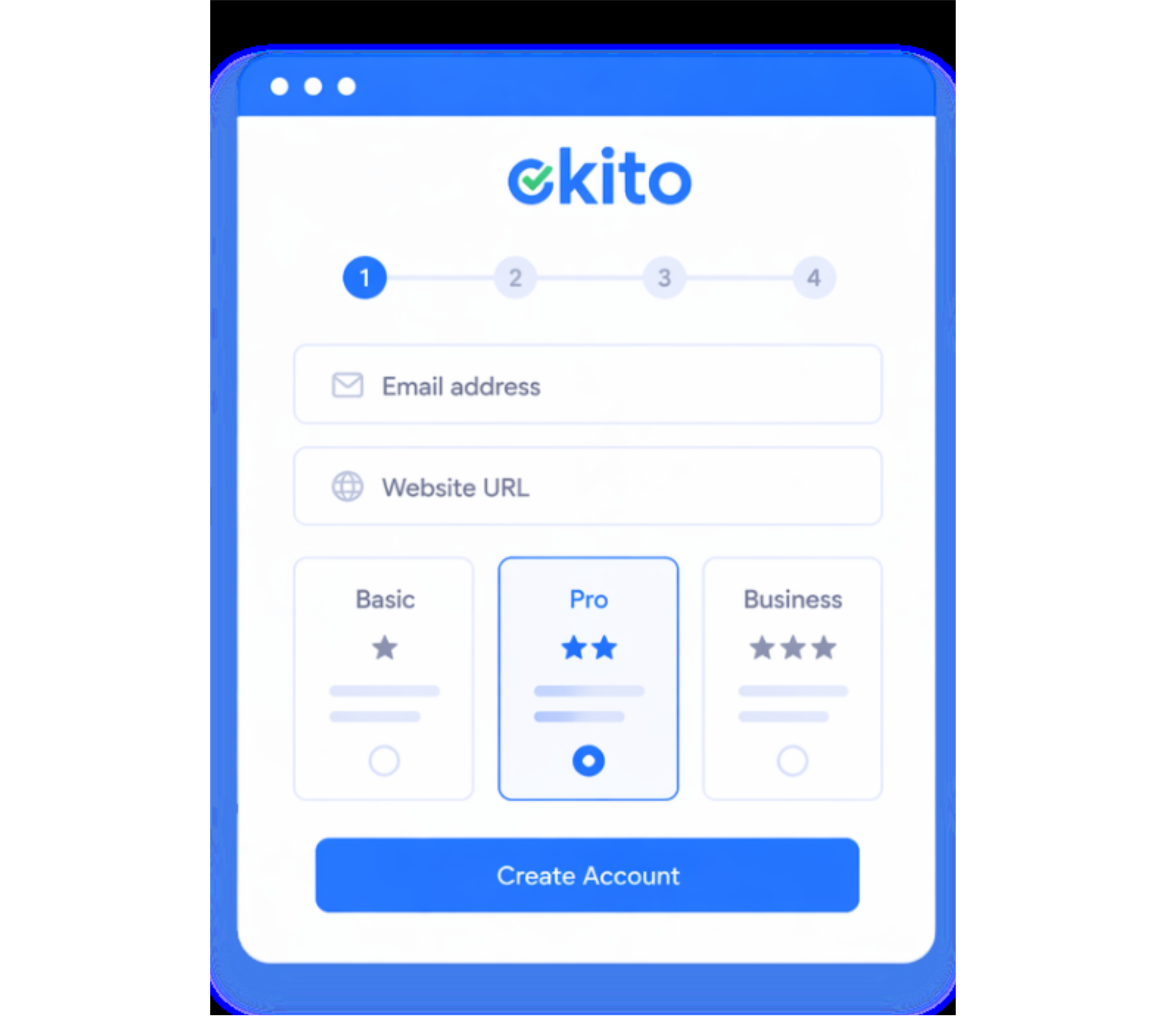
Create Your Okito Account
Add your website, choose the plan that fits your needs, and begin configuring TCF v2.4 from the Okito dashboard.
Copy Your Banner Code
Configure your banner design, data processing purposes, and vendors. Then copy the code generated specifically for your website.

Add the Code to Your Website
Place the code in your website’s <head> section or deploy it through Google Tag Manager. Publish your banner and start managing user preferences according to the TCF standard.

Configure Your TCF v2.4 Consent Experience
A TCF interface should present the right information in a clear and easy-to-follow order. Okito helps you configure this experience in line with the latest technical and interface requirements of TCF v2.4.
Enable TCF v2.4 settings through a guided setup.
Configure data processing purposes, features, and disclosures related to Special Feature 2.
Customize the layout, colors, and CSS to match your brand while preserving the required TCF information.
Give Users Clear and Flexible Choices
Visitors should be able to understand which purposes and vendors may process their data before making a choice. They should also be able to update their preferences or withdraw consent after their initial selection.
Present accept, reject, and granular preference options in a clear and balanced way.
Keep the preference center or banner recall button easily accessible.
Display the appropriate consent experience based on the user’s location.
Clearly explain the scope of preferences in supported multi-device environments.
Manage Vendors and Communicate Consent Signals
User choices should not remain limited to the banner; they must be communicated to the relevant vendors through a standardized mechanism. Okito helps present vendor information clearly and transmit consent signals consistently across the digital advertising ecosystem.
Manage vendors from the IAB Global Vendor List and eligible Google Ad Tech Providers.
Display each vendor’s data processing purposes and relevant disclosures.
Let users make granular choices by vendor and purpose.
Transmit preferences through the standardized TC String and configure Google Additional Consent support where required.
Why Does IAB TCF v2.4 Matter for Publishers and CMPs?
Clear User Choices in the Cookie Banner
TCF v2.4 helps users make informed decisions by allowing them to review data processing purposes and relevant vendors through the cookie banner.
Users can give consent, set detailed preferences, object to processing based on legitimate interest, or withdraw consent they previously provided.
The banner clearly indicates whether a choice applies only to the current service or across supported devices and environments belonging to the same service. Users can also access the preference center to update their choices at any time.
CMP and TC String Management with TCF v2.4
A CMP that supports TCF v2.4 processes the disclosures in the updated Global Vendor List and encodes user preferences in a TC String that follows the latest technical specification.
The interface clearly distinguishes between Purposes and Special Features that users can control and Features that are displayed for information only.
The accuracy of the signals contained in the TC String depends on whether the CMP configuration matches the website’s actual cookies, vendors, and data processing activities.
Consistent Consent Signals for Advertising Platforms
Ad tech providers receive user choice, purpose, and vendor signals through the TC String. Under TCF, consent is required to create profiles for personalised advertising and select ads based on those profiles.
Without the required consent, these activities cannot be signalled as permitted, and platforms may serve limited or non-personalised ads according to their own rules.
An up-to-date TCF v2.4 setup helps reduce issues caused by missing or misinterpreted consent signals, but it does not guarantee advertising revenue or legal compliance.
Frequently Asked Questions
IAB TCF stands for the IAB Europe Transparency & Consent Framework. It provides a common standard through which publishers, CMPs and advertising technology vendors can communicate users’ consent, objection and privacy choices.
A Consent Management Platform (CMP) is a software solution that informs users about data processing and enables them to accept, reject or customise their consent choices. Within the TCF, a CMP records these preferences and communicates them to publishers and participating vendors.
A CMP presents the relevant processing purposes and vendors, collects the user’s choices and encodes them in a standardised Transparency and Consent String, known as a TC String. This allows publishers and advertising technology vendors to receive and interpret consent or objection signals consistently.
IAB TCF is a voluntary industry standard rather than a law, and it does not replace GDPR compliance or applicable ePrivacy requirements. However, publishers using certain advertising platforms may be required to use a TCF-integrated CMP to preserve personalised advertising and measurement capabilities in regulated markets.
The IAB Global Vendor List is the official registry of advertising technology vendors participating in the TCF. It provides CMPs with each vendor’s declared purposes, features, legal bases and processing disclosures so that accurate information can be presented through the cookie consent banner.
IAB TCF v2.4 introduces clearer disclosures for multi-device consent, standard explanations and illustrations for Features, and safeguards against presenting Features beside controls users cannot disable. It also renames Special Feature 2 to “Identify devices based on information actively requested.” The official TCF v2.4 implementation timeline sets deadlines of 23 October 2026 for web environments and 23 February 2027 for mobile app and CTV environments.
Use a TCF-registered Consent Management Platform, accurately configure the vendors, purposes, features and legal bases used by your service, and implement the disclosures required by v2.4. Users must also receive clear choices and an accessible way to change or withdraw consent, while the organisation remains responsible for meeting applicable GDPR requirements.
Google’s Additional Consent Mode works alongside IAB TCF to communicate consent for eligible Google Ad Tech Providers that are not registered on the Global Vendor List. It produces a separate Additional Consent signal and should not be confused with Google Consent Mode v2, which controls how Google tags behave according to user consent.
Yes. Okito is an IAB Europe-registered CMP that supports IAB TCF v2.4. You can find OKITO LTD in the official IAB CMP List under CMP ID 508, approved for Web and Native App (Mobile) environments.