
 Türkçe
 English
Cookie Policy Template
Use this Cookie Policy Template to explain how your website or app uses cookies and similar tracking technologies. Learn what information to include, how to present user choices and when the policy should be updated.




























What Is a Cookie Policy?
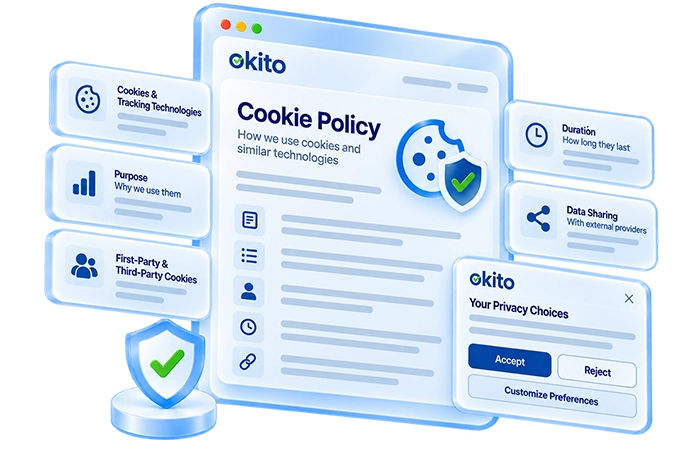
A Cookie Policy is a notice that explains how a website uses cookies and similar technologies, such as pixels, tags, local storage, software development kits and device identifiers.
It helps visitors understand:
Which cookies and tracking technologies are used
Why each cookie or tracker is used
Whether a cookie is set by the website or a third party
How long cookies remain on a user’s device
Whether information is shared with external service providers
How cookie preferences can be accepted, rejected or changed
A Cookie Policy provides transparency, but it is not the same as a cookie consent banner. The policy explains the website’s practices, while the banner or preference centre enables visitors to make and manage their choices.
Is a Cookie Policy Required?
The answer depends on where your users are located, which technologies you use and which privacy rules apply to your organization.
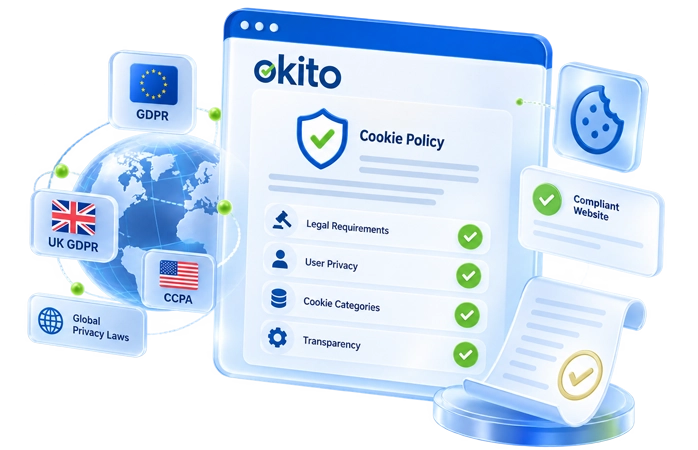
EU and UK rules generally require clear information and prior consent before non-essential cookies are activated.
US state privacy laws may require notice and opt-out choices for targeted advertising or the sale or sharing of personal information.
Strictly necessary cookies may not require prior consent, but their use should still be explained.
A separate Cookie Policy page is not always compulsory, although cookie information must remain clear, accessible and easy to find.
Publishing a policy does not make a website compliant on its own. The cookie banner, preference controls and actual script behaviour should match the information in the policy.
What Should a Cookie Policy Include?
The content should be based on the technologies found on the website or app. Each cookie or tracker needs enough detail for users to understand what happens to their information.
Include:
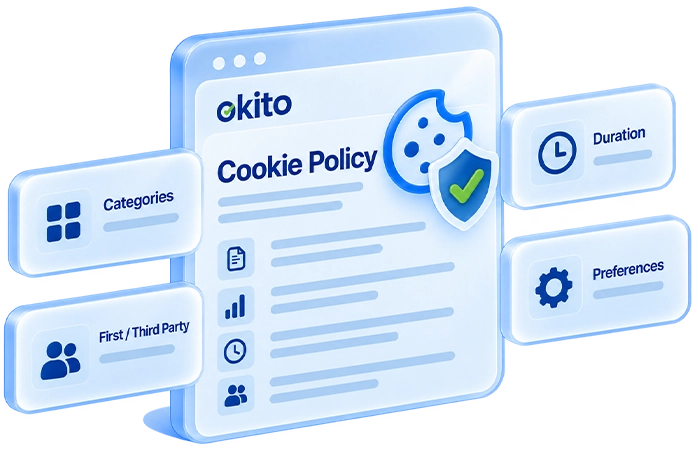
The name, provider and purpose of each cookie or tracker
Its category, such as necessary, functional, analytics or advertising
How long it remains active and whether it comes from a third party
The types of information involved and who may receive it
Instructions for accepting, rejecting or changing cookie preferences
A clear “Last updated” date and contact information
If pixels, tags, SDKs or local storage are also used, include them instead of limiting the policy to traditional browser cookies.
Where Should You Display a Cookie Policy?
The Cookie Policy should remain available before and after a user makes a choice. Visitors should not have to search through several pages to find it.
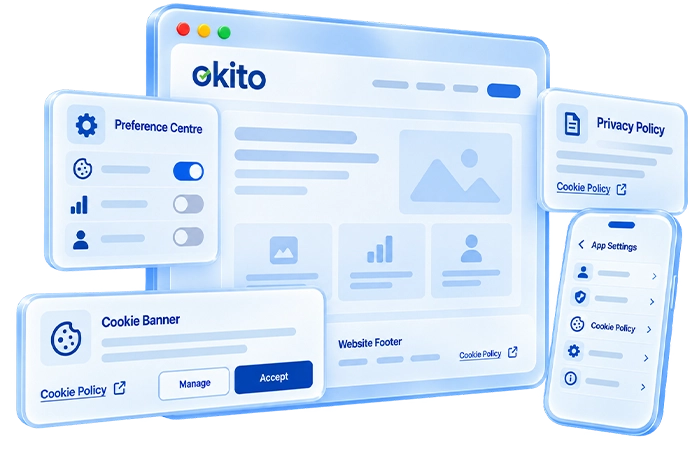
Place a direct link:
In the website footer
Inside the cookie consent banner
Within the detailed preference centre
In the Privacy Policy or privacy centre
For mobile apps, the policy can also appear in the privacy settings, onboarding flow or app information area.
Use a clear label such as “Cookie Policy”. If cookie information is included within a longer Privacy Policy, link users directly to the relevant section.
Cookie Policy Examples
Cookie Policies can vary in length and presentation, but the strongest examples have one thing in common: they make technical information easier to understand.
The following examples show different ways to organize cookie information. They are presented for structural inspiration only. A business should never copy another organization’s policy because its technologies, providers and legal position may be different.
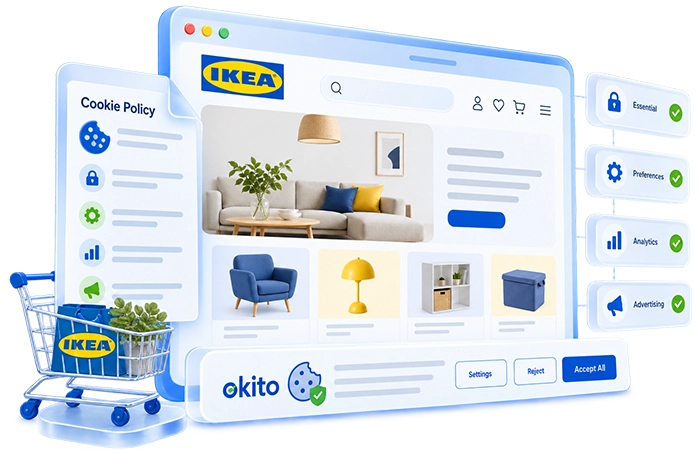
IKEA Cookie Policy Example
IKEA shows how cookie information can be written around familiar parts of an online shopping experience.
Essential cookies are connected with functions such as secure access, page navigation and shopping carts.
Preference cookies are explained through choices such as language, region and saved settings.
Analytics information is linked to understanding how visitors use the website.
Advertising technologies are discussed separately from the tools needed to operate the store.
The main lesson is clarity: describe what each category does in language that makes sense to the person using the website.
BBC Cookie Policy Example
The BBC uses a question-led structure to make a detailed subject easier to explore.
Information is divided into short, recognizable topics.
Cookie purposes are described without relying heavily on technical language.
Users can move from a general explanation to more detailed information.
Preference controls remain connected with the policy.
This approach works well for websites with different types of content, services and audiences. Visitors can go directly to the answer they need instead of reading the entire policy from beginning to end.

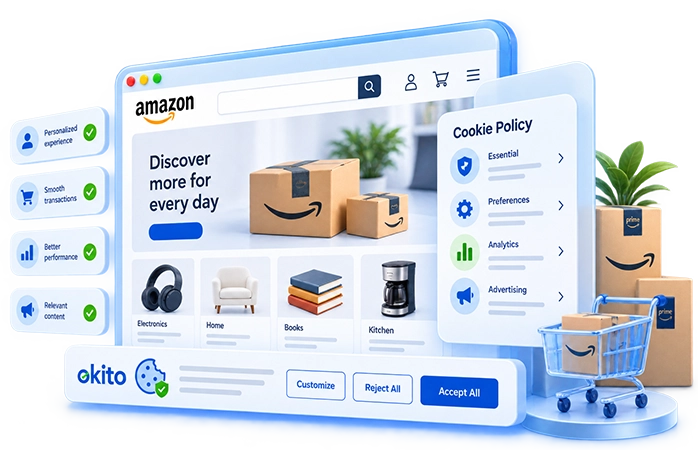
Amazon Cookie Policy Example
Amazon illustrates how cookie information can be organized for a digital service with accounts, transactions, recommendations and advertising activities.
Operational cookies are linked to sign-in, security and order processing.
Preference technologies cover settings, saved choices and personalized features.
Analytics tools are discussed in relation to website use and performance.
Advertising choices are separated from the technologies needed to provide the service.
For complex platforms, grouping technologies by purpose can make a long Cookie Policy easier to understand and manage.
Frequently Asked Questions Cookie Policy Template
Some cookies collect or create information that may relate to an identifiable person, while others do not. The result depends on the cookie’s purpose and the information connected to it.
Cookie-related data may include:
IP addresses and device identifiers
Pages viewed and links selected
Language or location preferences
Account or session identifiers
Advertising and interaction data
Even when a cookie does not contain a person’s name, its identifier may count as personal data when it can be linked with other information.
Yes. Users can manage optional cookies through a consent banner or preference centre, or block and delete cookies through browser settings.
Disabling cookies may affect features such as account access, shopping carts or saved preferences. Strictly necessary cookies should therefore be separated from optional functional, analytics and advertising technologies.
Some are, but many are not. Strictly necessary cookies support essential functions such as:
Login sessions and account security
Shopping carts and checkout
Network management
Fraud prevention
Remembering privacy choices
Analytics, personalization and advertising cookies are generally optional and should be identified separately.
Third-party cookies come from a domain or service other than the website being visited. They may be used by external analytics, advertising, video, chat, payment or social media services.
A Cookie Policy should identify relevant third-party providers, explain their purposes and describe the privacy choices available to users.
Not in every case. Under EU and UK rules, strictly necessary cookies may generally operate without prior consent when they are genuinely required for a requested service or essential website functions. Other technologies generally require a valid choice before activation.
Requirements vary by jurisdiction, so the appropriate approach depends on the technology, its purpose and the applicable law.